Although operating on similar principals, unmanned aircraft systems (UAS) and manned aircraft operate on different levels of autonomy depending on their intended purpose. Automation varies by the level of decision-making ability of the controlling logic. The rankings of autonomy are on a scale developed by the National Institute of Standards and technology and range from zero to ten. The lowest level, zero, indicates that the operator has direct control, much like flying a remote-control aircraft. Low levels of autonomy, 1 to 4, are where the aircraft receives instructions from the operator and then uses the internal logic to execute them, such as course corrections or maneuvers. The mid-level of autonomy, 5 to 7, is where the human operator sets the mission parameters for the vehicle and it is free to decide how those goals are accomplished. Finally, high levels of autonomy, 7 to 9, is where the system acts independently unless the operator takes control (Marshall, 2016).

There are differences between manned and UAS operations in the national airspace system (NAS), for example, manned aircraft the ability to respond to the air traffic controller’s commands. Automated systems, require a higher degree of sophistication, work is ongoing to integrate them into the NextGen air traffic control scheme, the problem is to make sure the infrastructure does not require constant updates to keep up with the changing UAS technology (Strohmeier, 2014). Recent research has proven the ability of UAS to recognize speech from controllers and the ability to respond commands, this could speed the integration of UAS into the NAS but it will require refinement of the system (RMIT University, 2015). Currently, manned and UAS operations are kept segregated for safety reasons, even though these technologies are promising until enough data is collected to prove the reliability, they will continue to be separate as much as possible. With manned aircraft, even operating with the automation activated, the pilot is on board the aircraft, able to override the logic at any time, whereas with UAS, the pilot is in a remote location and due to signal latency, immediate action is not possible.
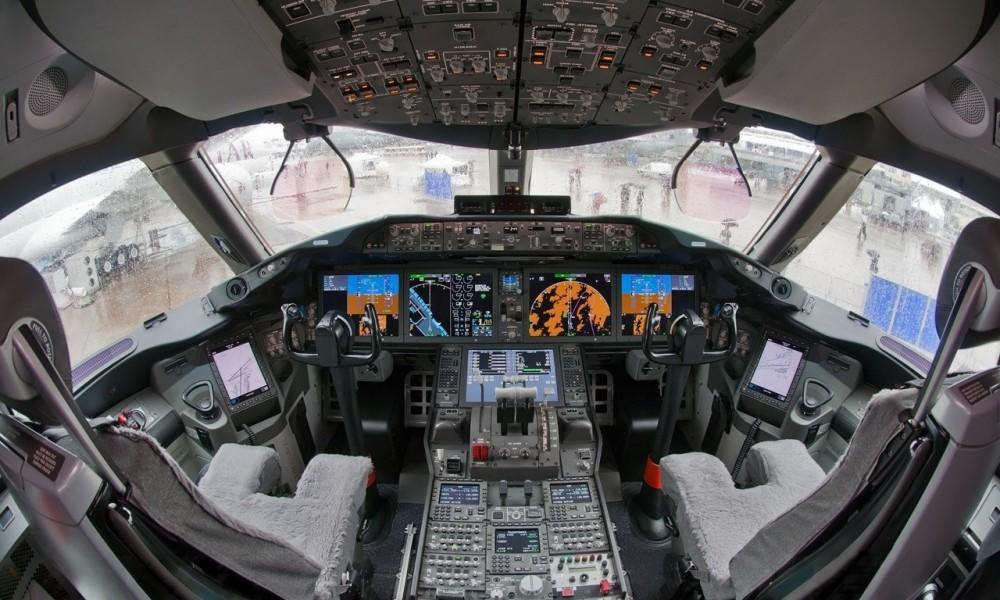
Increasing the levels of automation in aviation does reduce the workload of the flight crew, the problem is that they are more of a system operator instead of a pilot, and skills once used every day are now degrading due to lack of use. Some of the more advanced aircraft have been accused of overriding the pilot’s commands, a controversial Airbus A320 crash in 1988 is one such incident, to this questions surround the investigation due to the rapidity in which it was conducted and the conclusions made by the investigators (Pope, 2014). It is apparent that this reliance on automation for transport category aircraft, once seen as a cost-saving measure to reduce crew positions and alleviate fatigue, has now resulted in the degradation of particular skills that are required to deal with routine flying and the rare emergency. UAS is a different platform and requires automation to function correctly due to the remote nature of the pilot.
Marshall, D. M. (2016). Introduction to unmanned aircraft systems. Boca Raton, FL: CRC Press. Retrieved from https://ebookcentral-proquest-com.ezproxy.libproxy.db.erau.edu/lib/erau/reader.action?docID=4710295
Pope, S. (2014, April 23). Fly by Wire: Fact versus Science Fiction. Retrieved from Flying: https://www.flyingmag.com/aircraft/jets/fly-by-wire-fact-versus-science-fiction/
RMIT University. (2015, February 27). Talking drone offers aviation safety boost. Retrieved from Science Daily: https://www.sciencedaily.com/releases/2015/02/150227084301.htm
Strohmeier, M. S. (2014). Realities and challenges of nextgen air traffic management: the case of ads-b. IEEE Communications, 111-118. doi:10.1109/MCOM.2014.6815901

 Patrick Carroll