OFF THE SHELF SOLUTION
The pyrovalve pellet is perhaps one of the hardest things to acquire for the RMS Hybrid, they are no longer made by the original manufacturer but can be duplicated at home. According to the data pack they are made from black powder compressed into a pellet 0.625 diameter x 0.250 thick. This can be done with a hand pump hydraulic press but requires a tool be manufactured and you can only make one at a time. Thankfully I was given a tip by Mr. Rosenfield concerning the prototype, he used a C size black powder motor cut to the required thickness and the casing peeled away to the proper diameter. It is perhaps the simplest and safest solution to overcome the lack of available pellets. Readily available and can be made at home with only a few tools.
First and foremost, safety, safety, safety. We are dealing with black powder here. Use non sparking tools and go slow. I used a small razor saw and miter box available form Zona tools, which are made in the U.S., relatively inexpensive, and of high quality. I got mine from Amazon. It comes with a 24 TPI and I bought an additional 42 TPI, the 24 is more than sufficient as the 42 TPI just took longer and produced almost the same finish on the cuts.
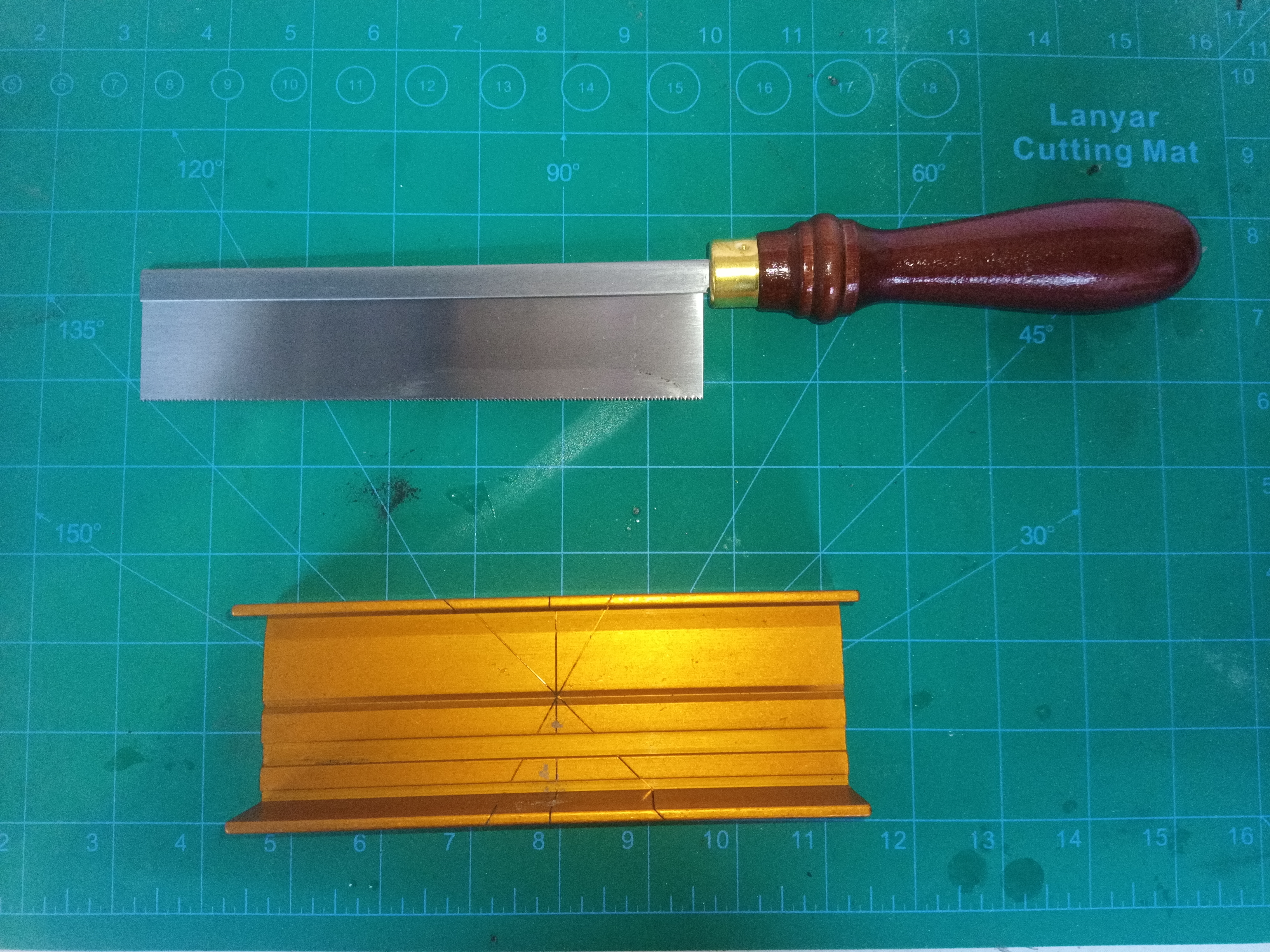
I used a small C-clamp to secure the motor and keep it square in the miter box. The paper casing was the hardest to cut through. Also be sure to watch the angle of your saw blade to make sure you keeping it square.
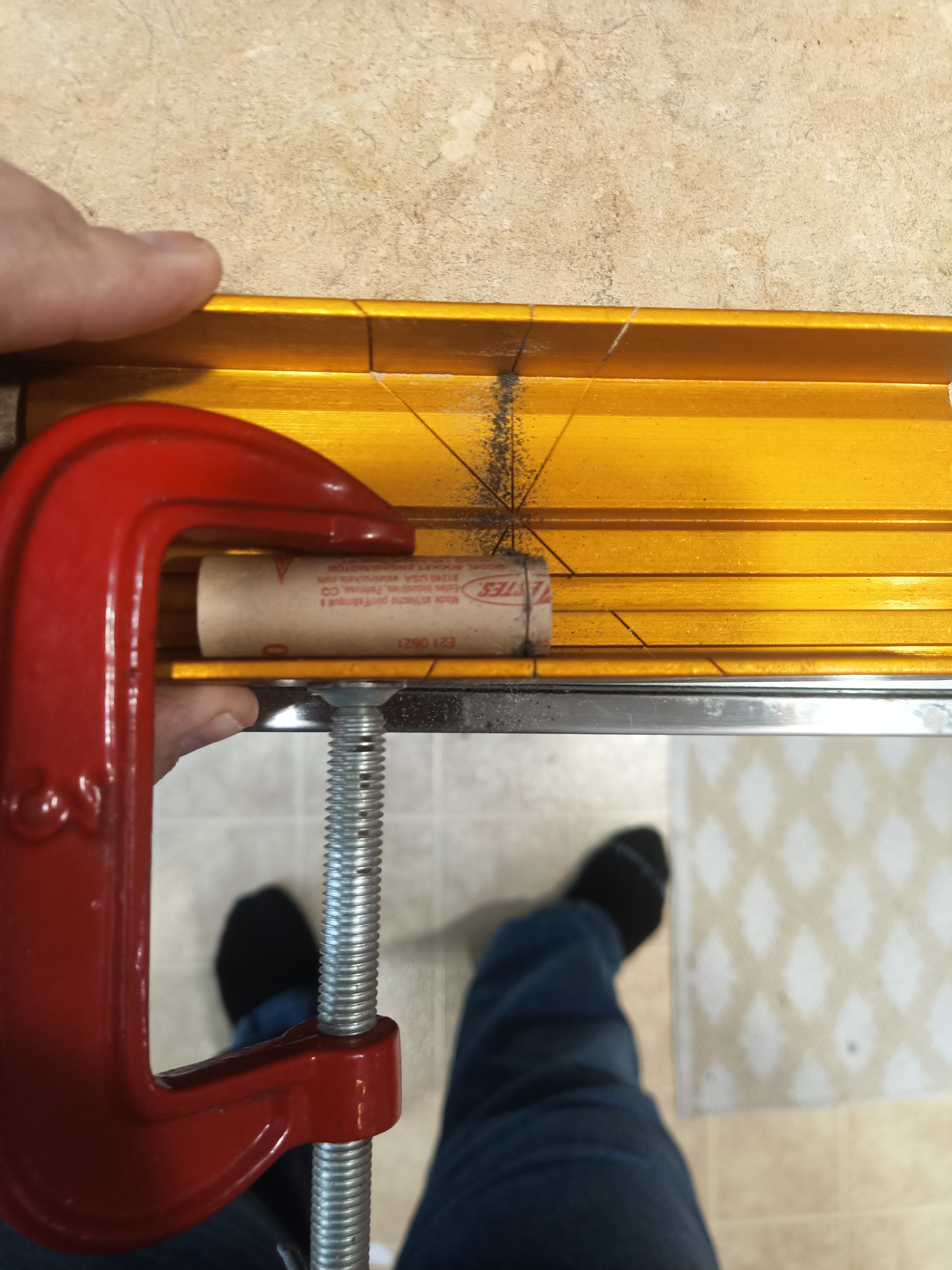

The next picture shows how well made these saws are. While cutting a D size motor I got distracted and you can see the result, thanks to Amazon’s logistics I was able to get another the next day. The saw itself still cuts like it was new.

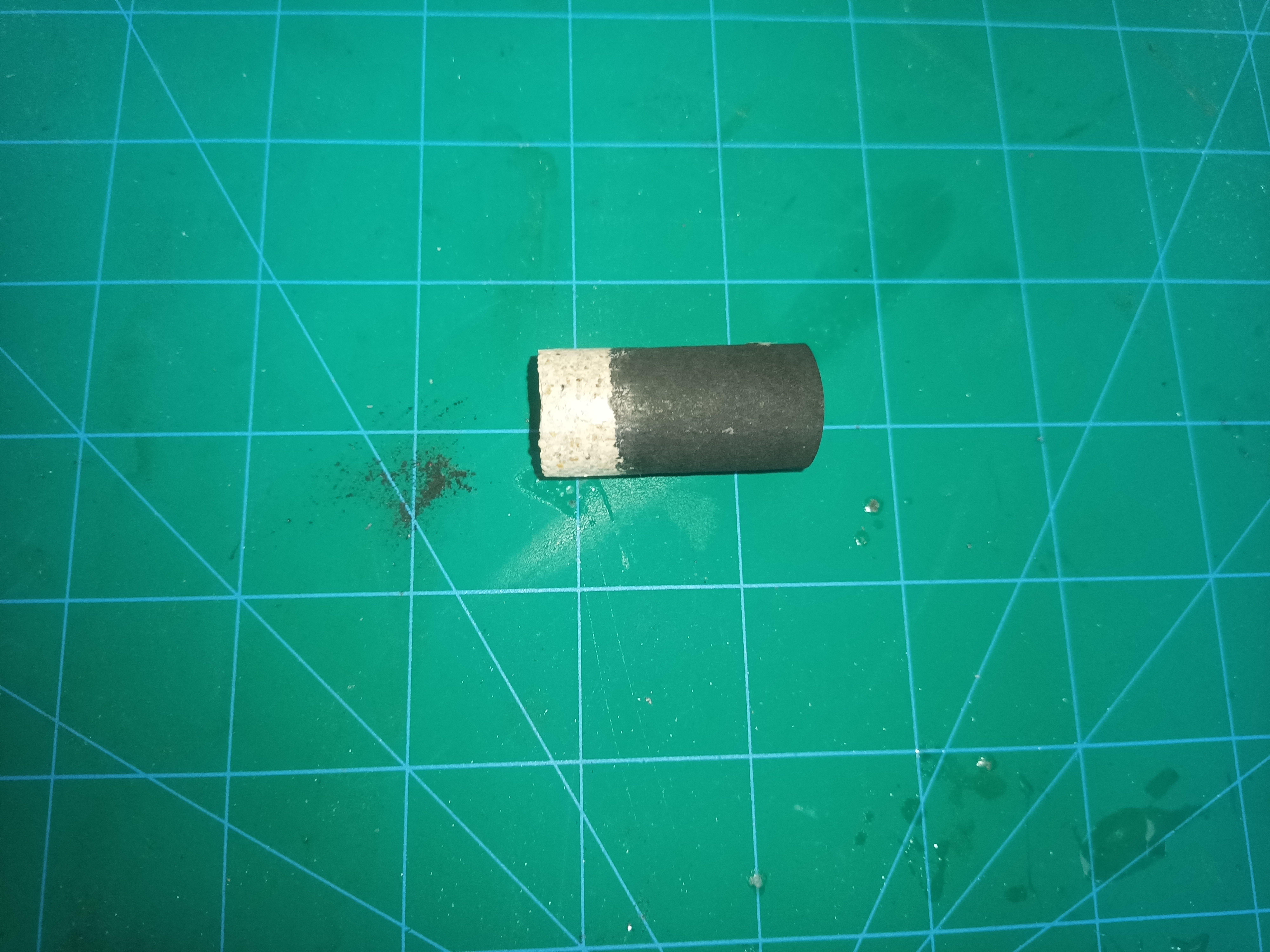
After the motor is trimmed to get rid of the excess case and the rough end of the grain, measure out to 0.250 or 1/4 inch lengths and commence to sawing.
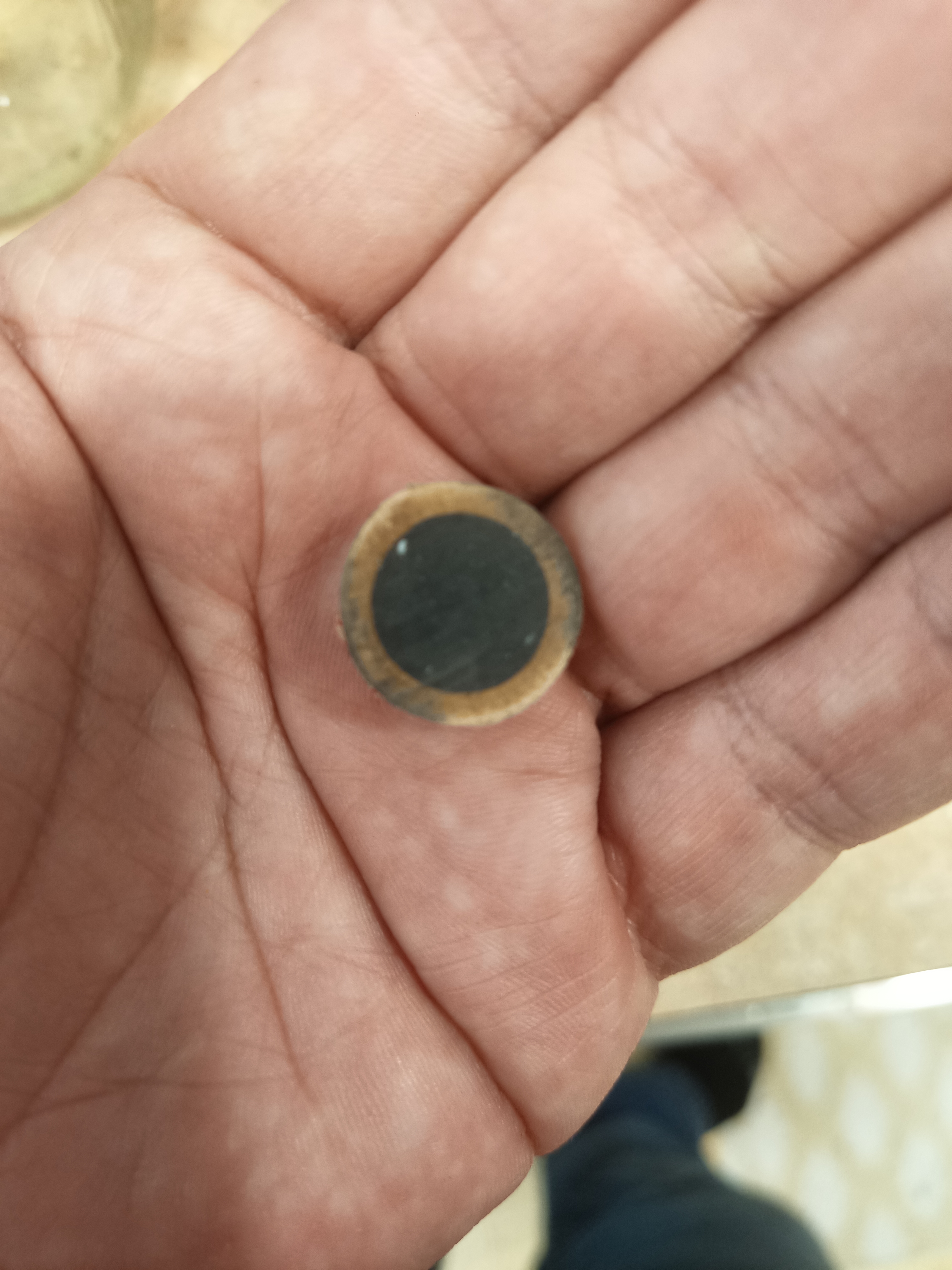
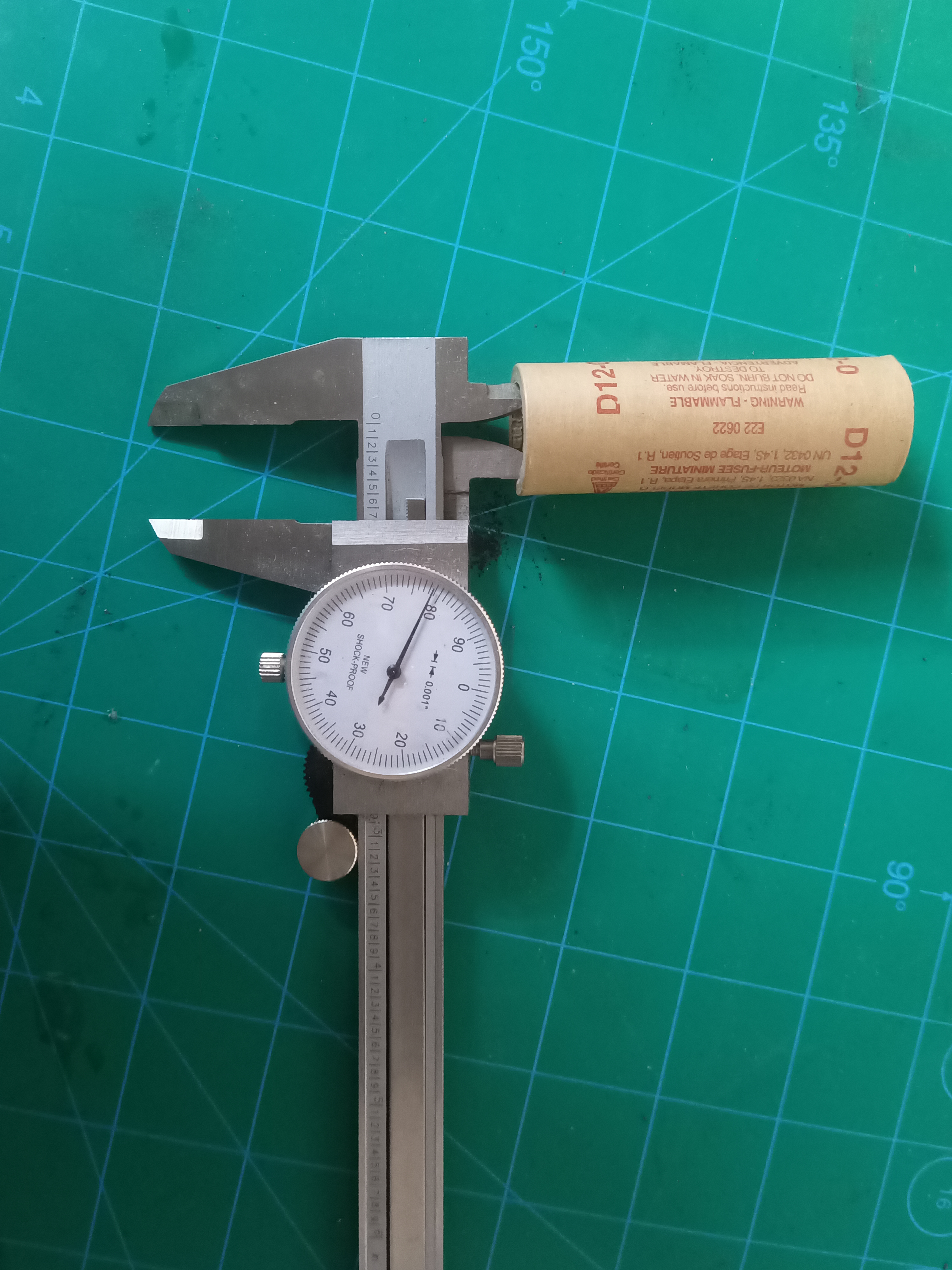
Outside diameter if the motor is about 0.670 so we now come to Method A of making the pryovalve. Peel away the casing until reach a diameter of 0.625 or 5/8.

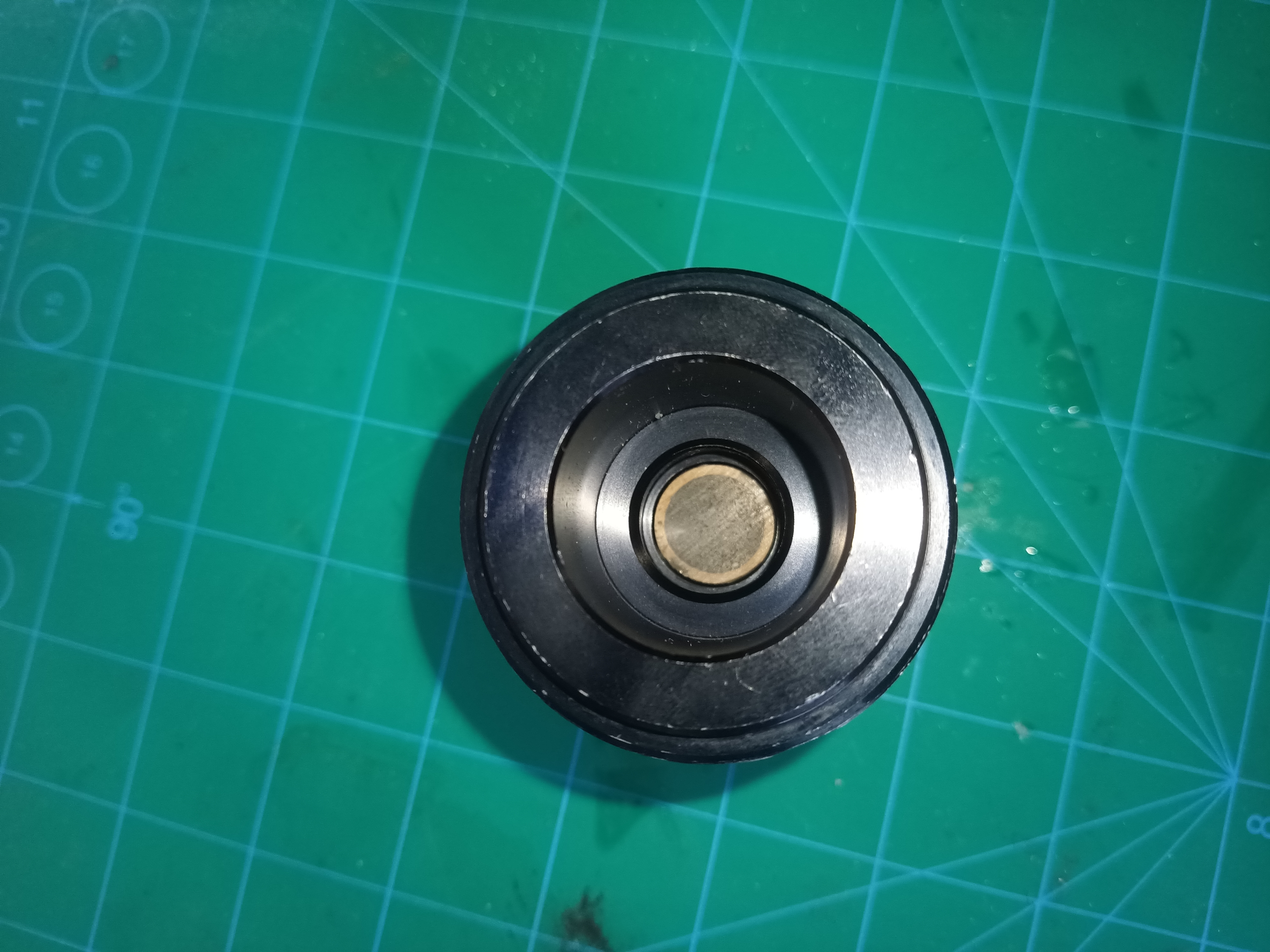
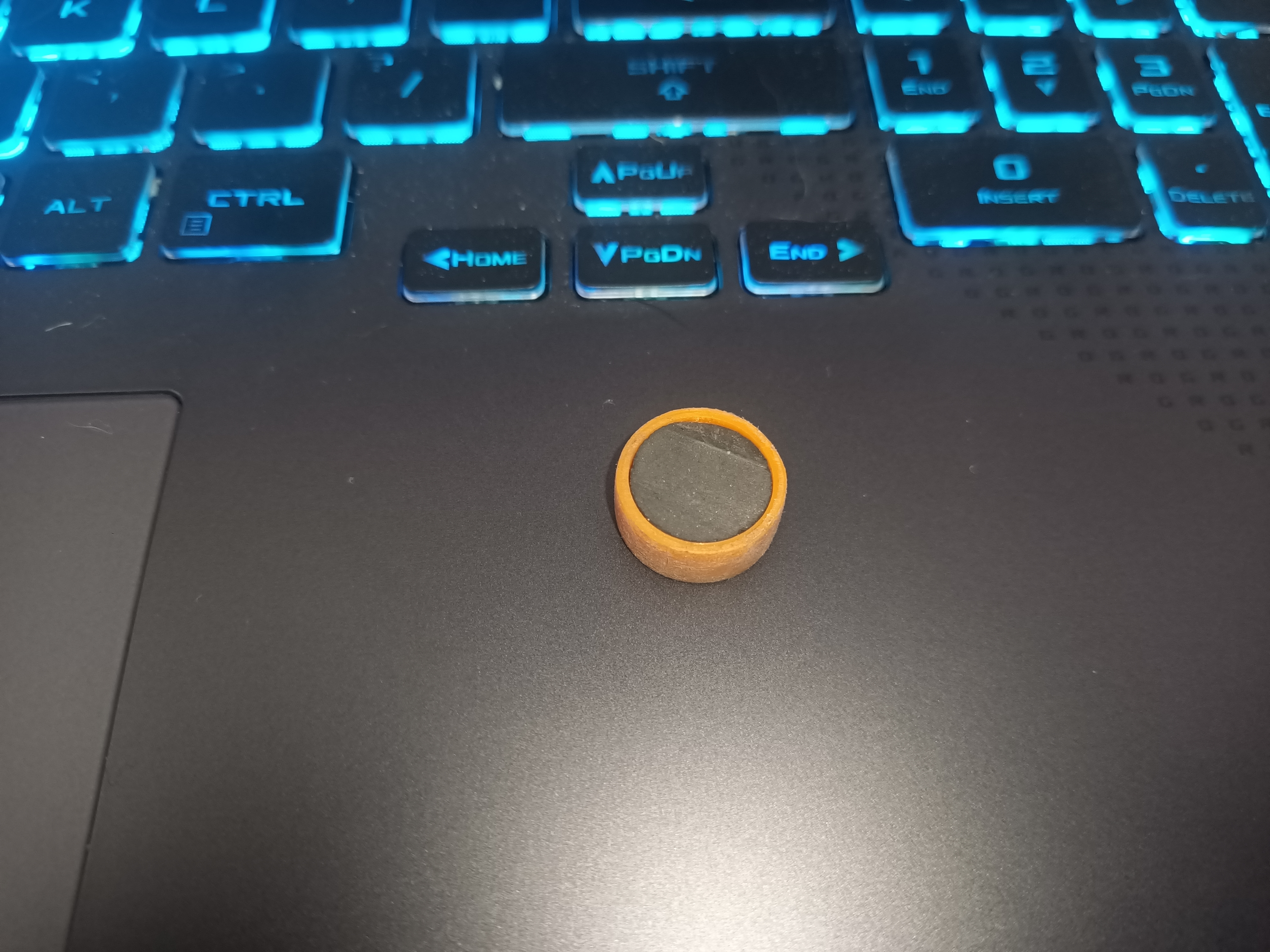
Method B is a little bit more involved, it involves unwrapping the motor entirely and using a 3D printed spacer ring. I tried cutting the grain while it was unwrapped but discovered a problem at the end of the cut the grain will tend to break away and will not leave a smooth end.
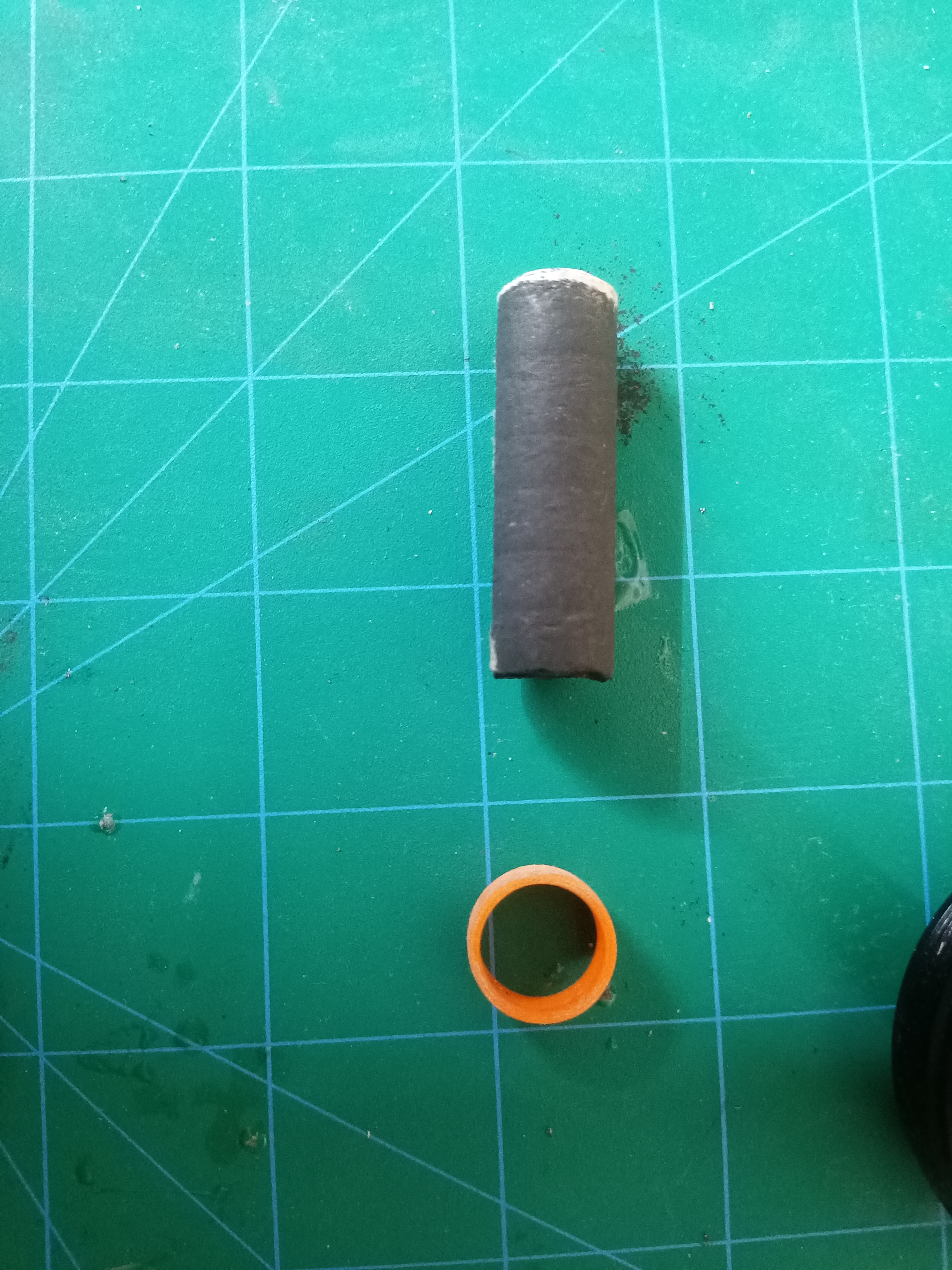
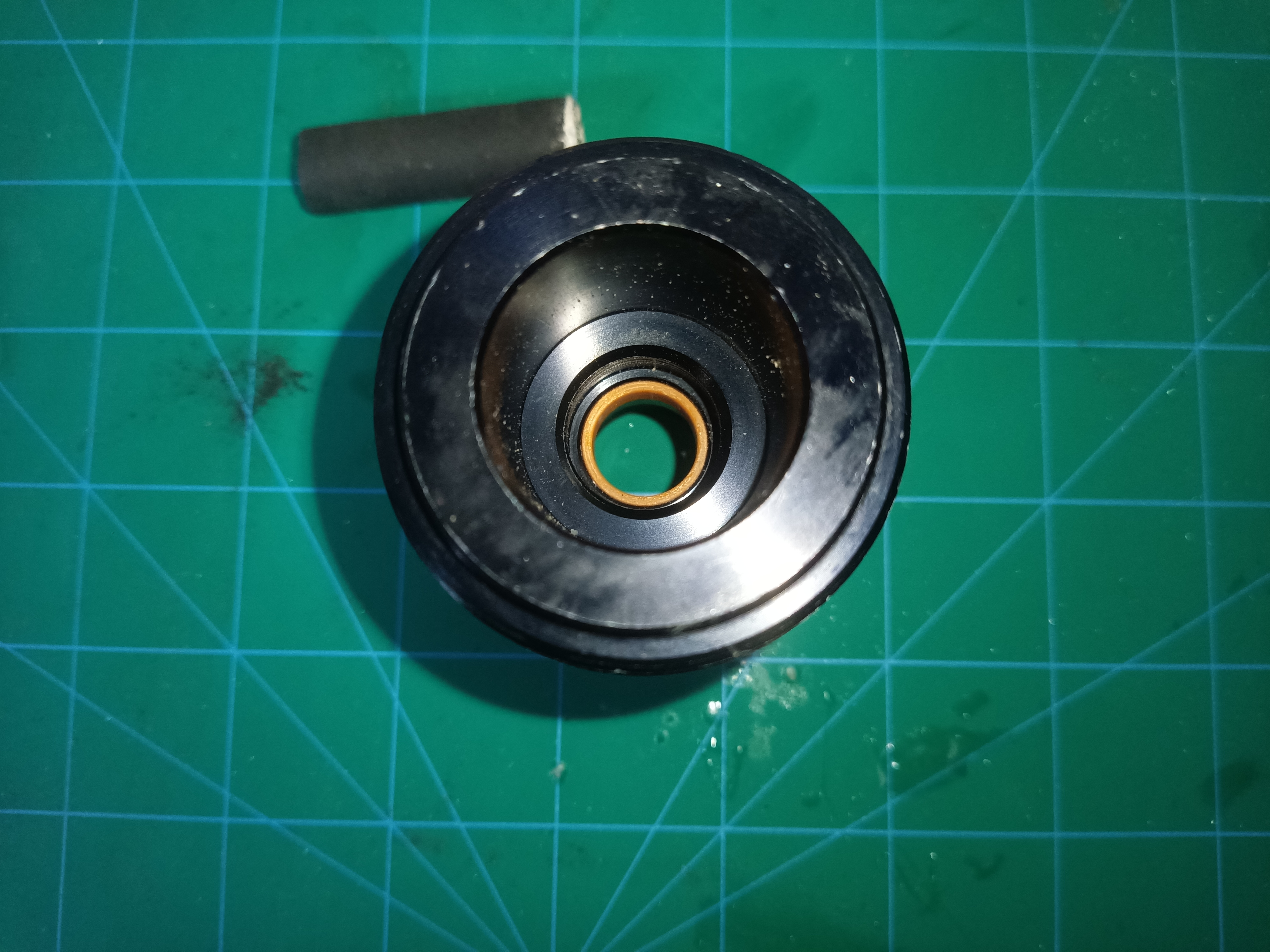
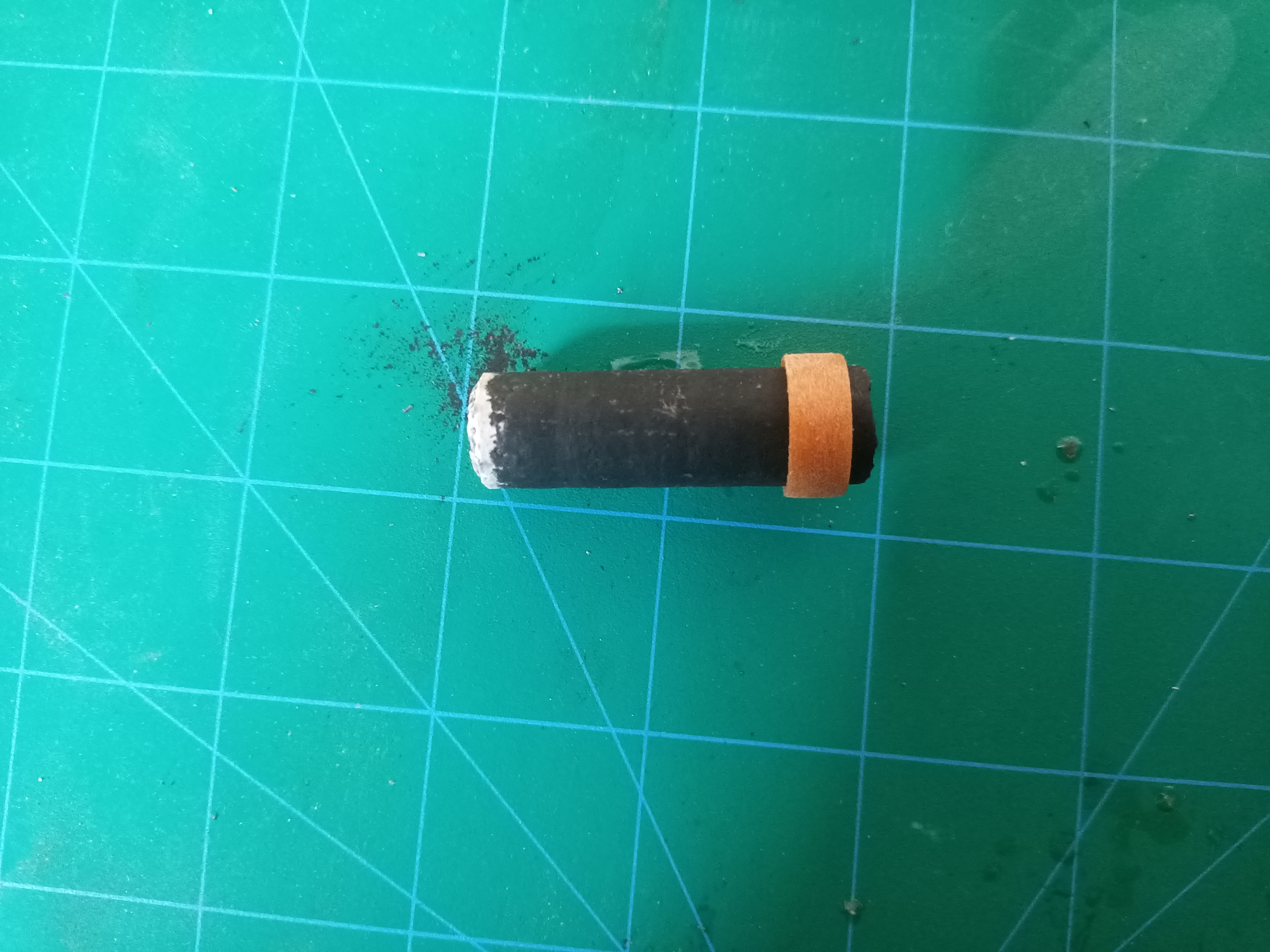
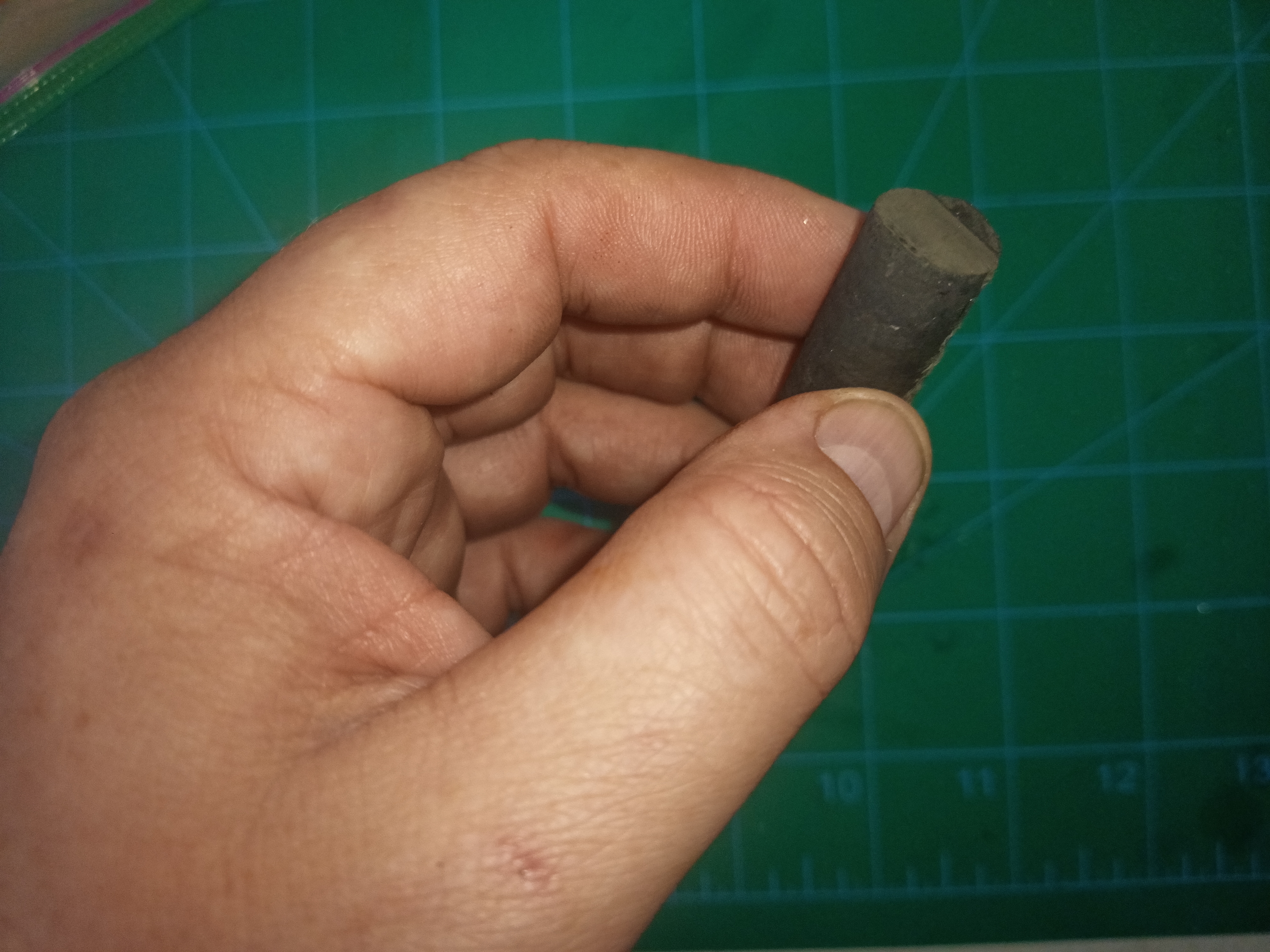
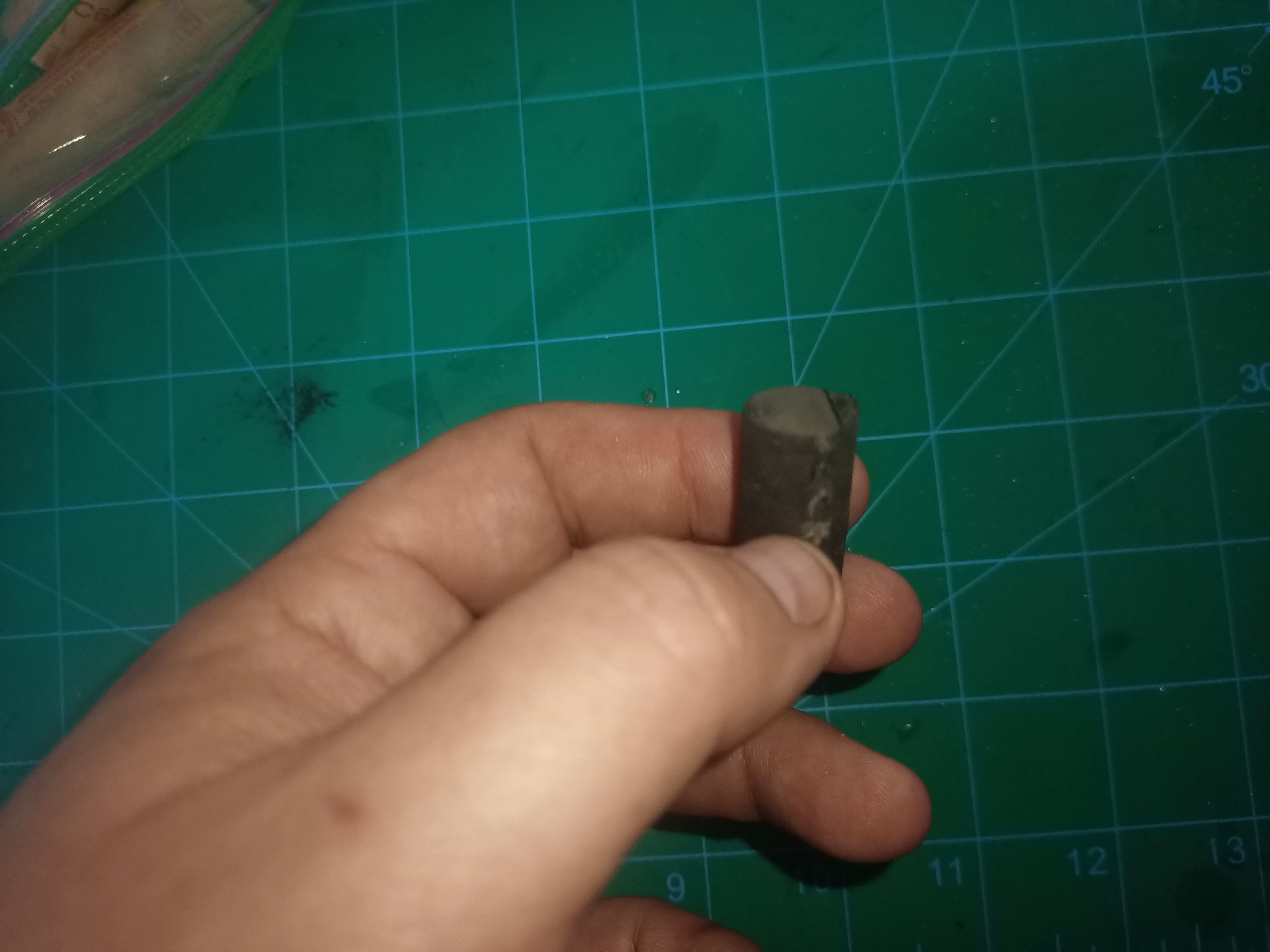
In the picture above it shows where the edge broke off as the cut was approaching the end, even using minimal pressure with the saw produced this effect multiple times.
For the 18mm motors it is probably best to cut them with the paper on and either unwrap it to the proper diameter or removing the casing completely and use the spacer after cutting. The use of a 24mm motor provides a larger grain, Method B, that has a diameter of 0.68 which can then be turned down carefully on a small tabletop lathe. I currently do not have one of those yet, so this method will most likely be investigated with the 98mm size motor later on.
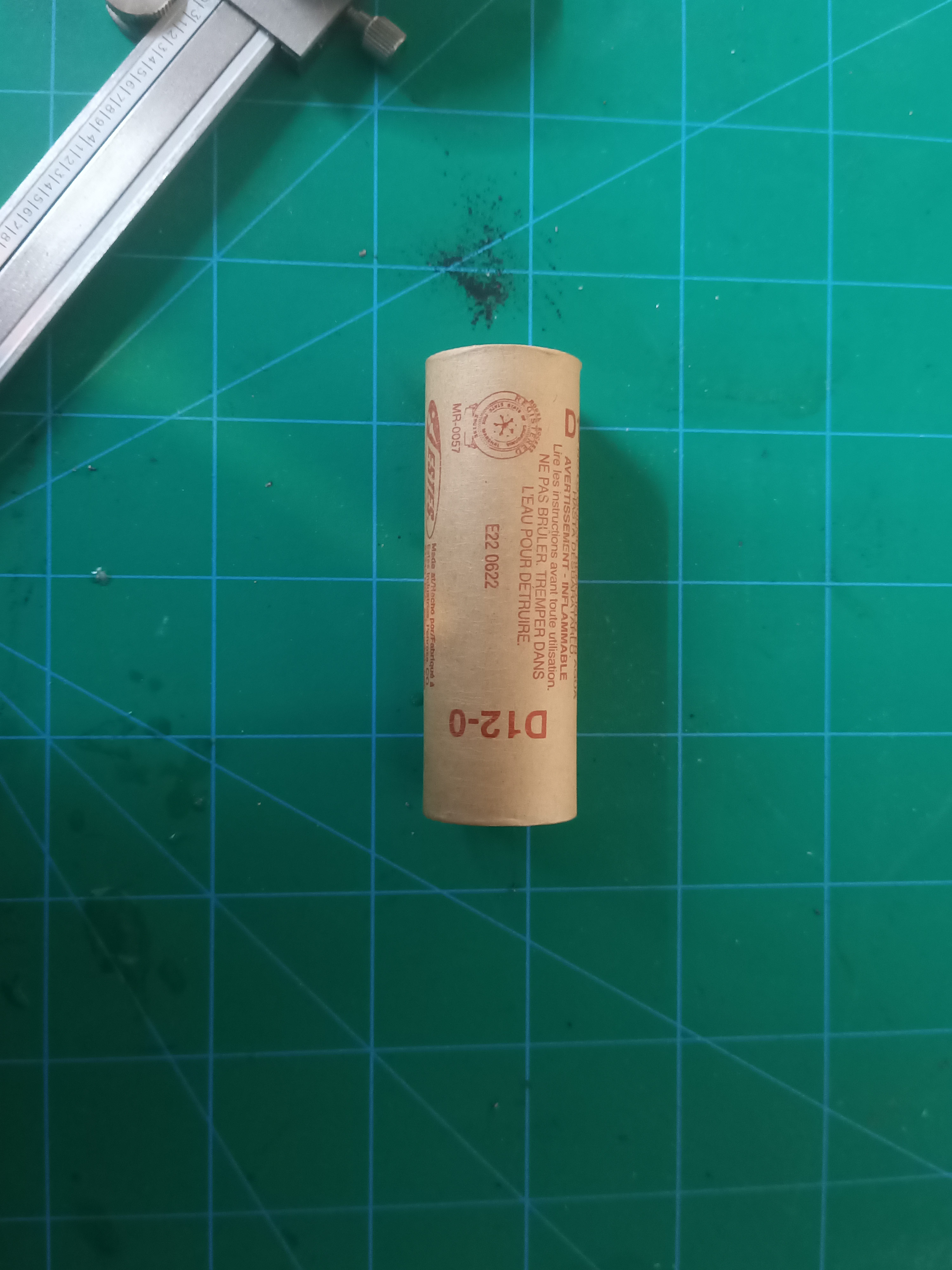
I finally got my order into to RCS for the remaining supplies. Next installment should cover the preheater grain and insulator and may have some propellant casting as well.
 Patrick Carroll