After gaining experience with the 54mm ABS grain shell, I decided to do the 98mm. Using a printed shell allows you to select the right amount of infill based on your fuel viscosity. You will need to account for the high shrinkage of paraffin, approximately 17%, so once it cools a little bit, top off the grain. If you size your grains by the standard RCS available for 98mm, it is six inches long. I designed it with a 1 1/8″ core. Those experienced with CAD can put in a helix-style core, but I will need some more time to learn that.
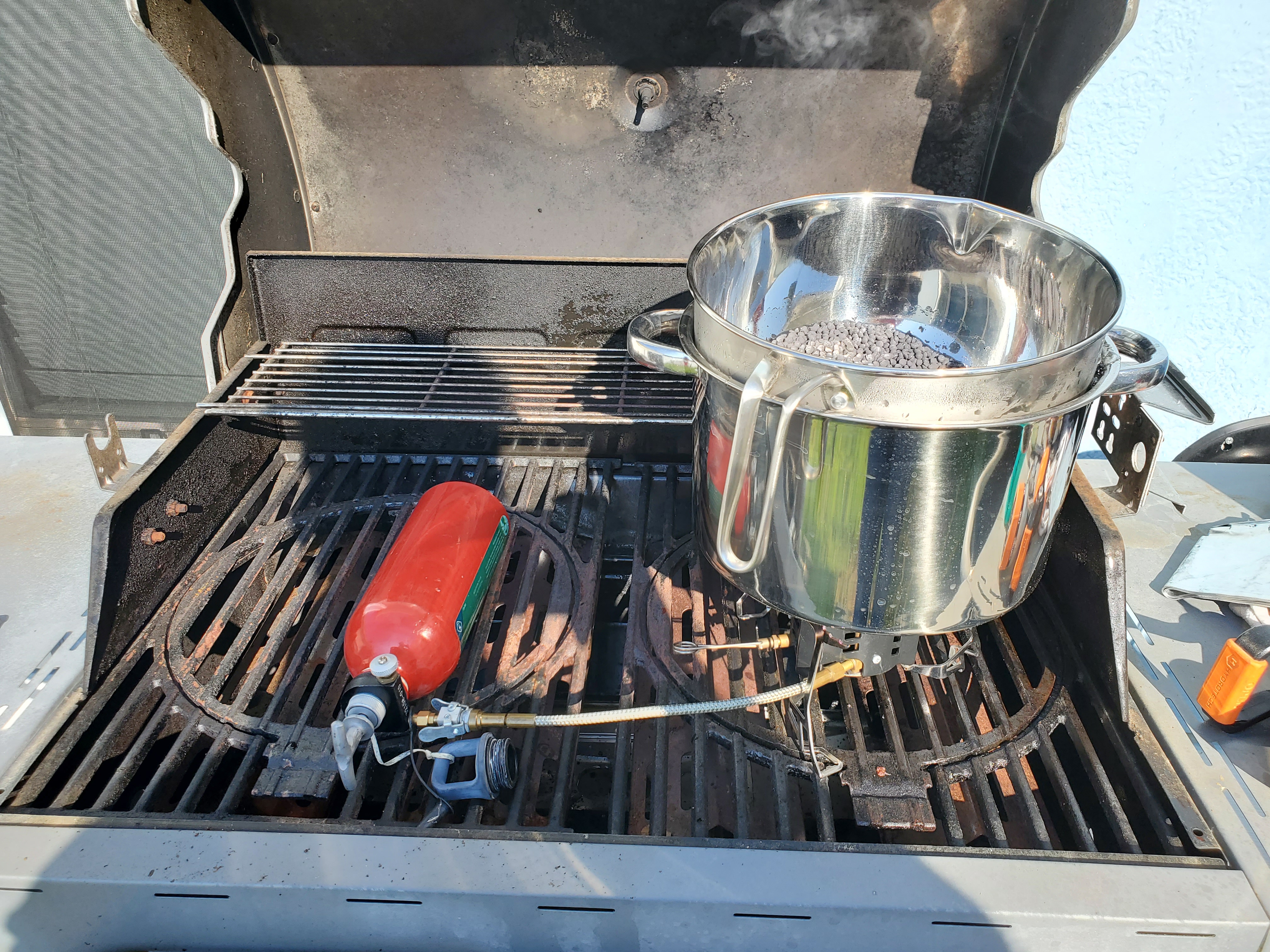
The yield from a 1kg roll of ABS filament is 4 grains at 20% grid-style infill. I used 400g of paraffin with the black cupric oxide, which left a little over in the pan after topping off. The double boiler adds a layer of safety since the melting point of the paraffin is 160 deg F. There is a great microcrystalline synthetic wax that I discovered in the 54mm experiments, but it is in Germany and requires a 50lb bag plus shipping. The high-melting-point paraffin will work well for these experiments since it is readily available on Amazon
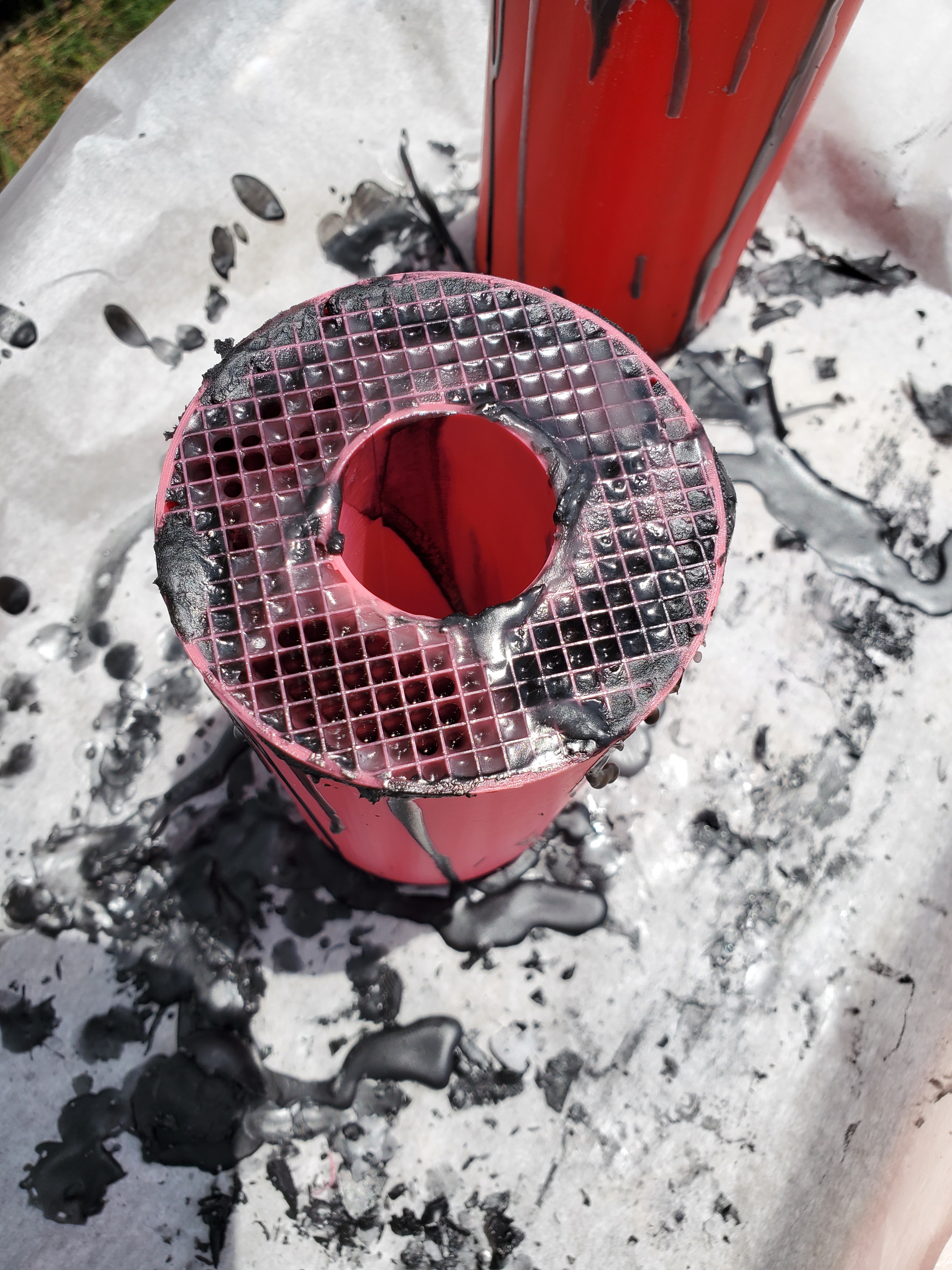
Shrinkage of the paraffin after it begins to cool.
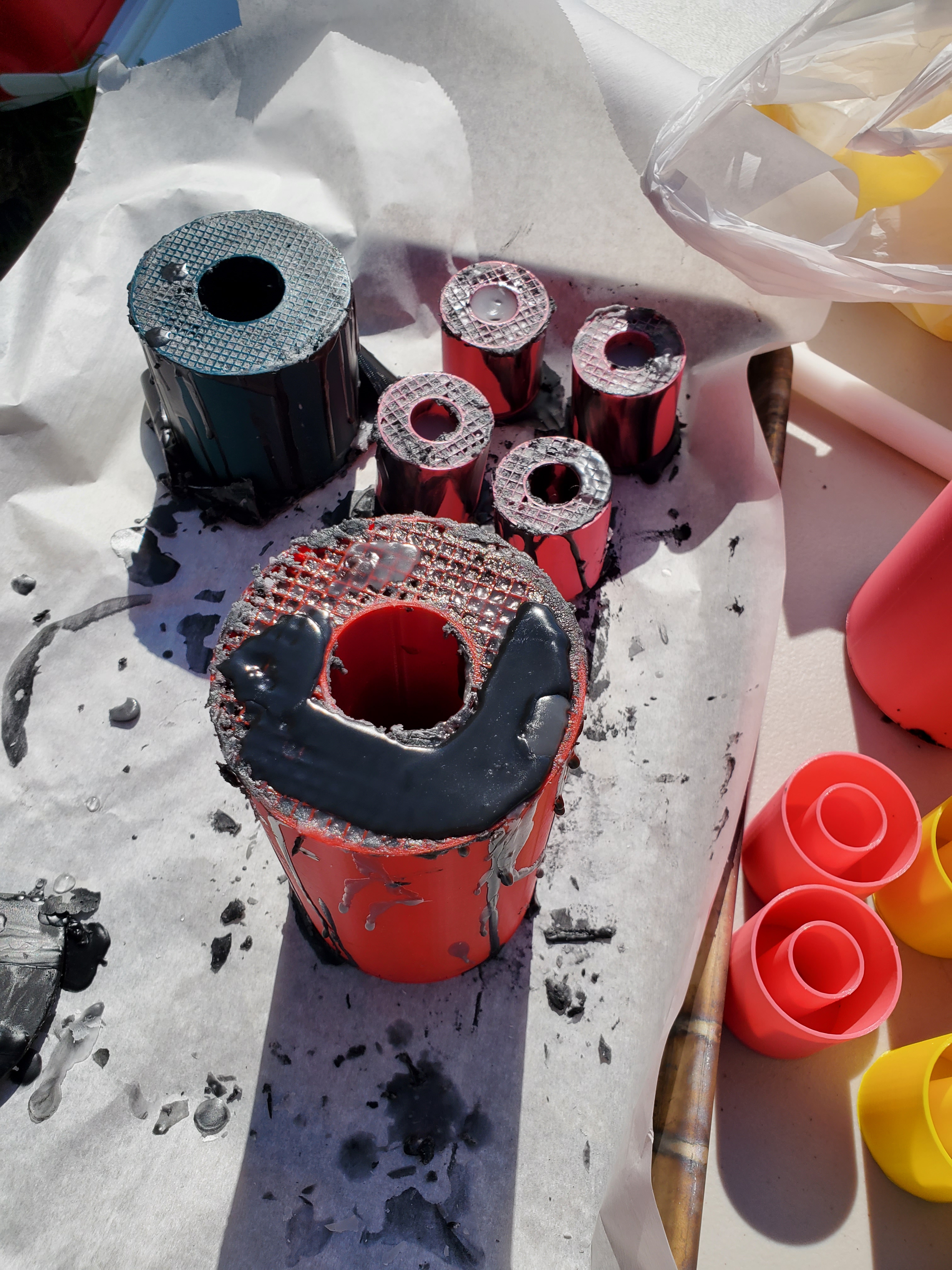
Topping off, the paraffin is easily removed from the grain after cooling.
Figure about 9 dollars per grain after material costs; add in the nitrous, liners, and nozzels, and there is still significant savings over a composite motor. Graphite nozzles will further increase your cost savings if designed properly.
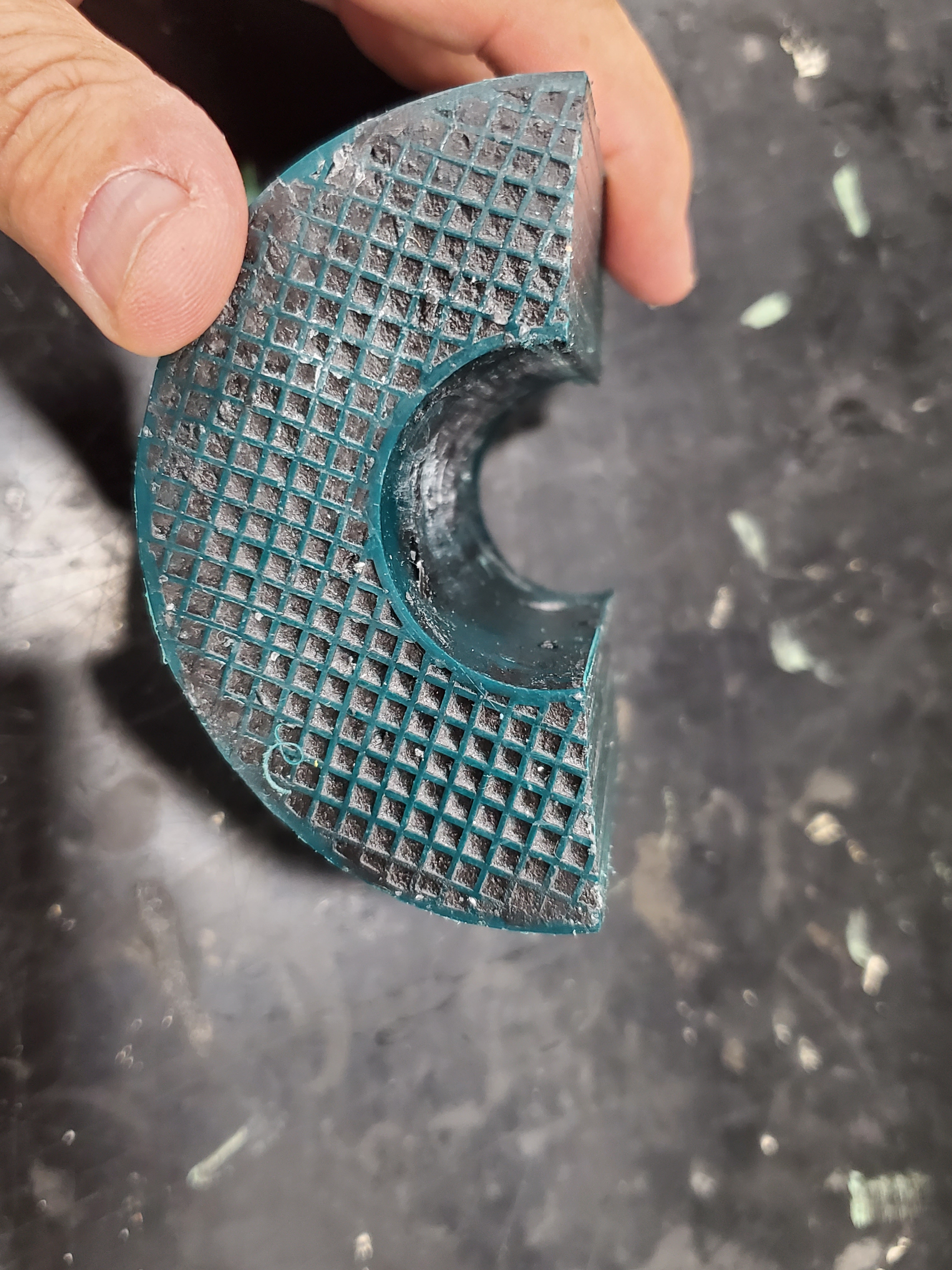
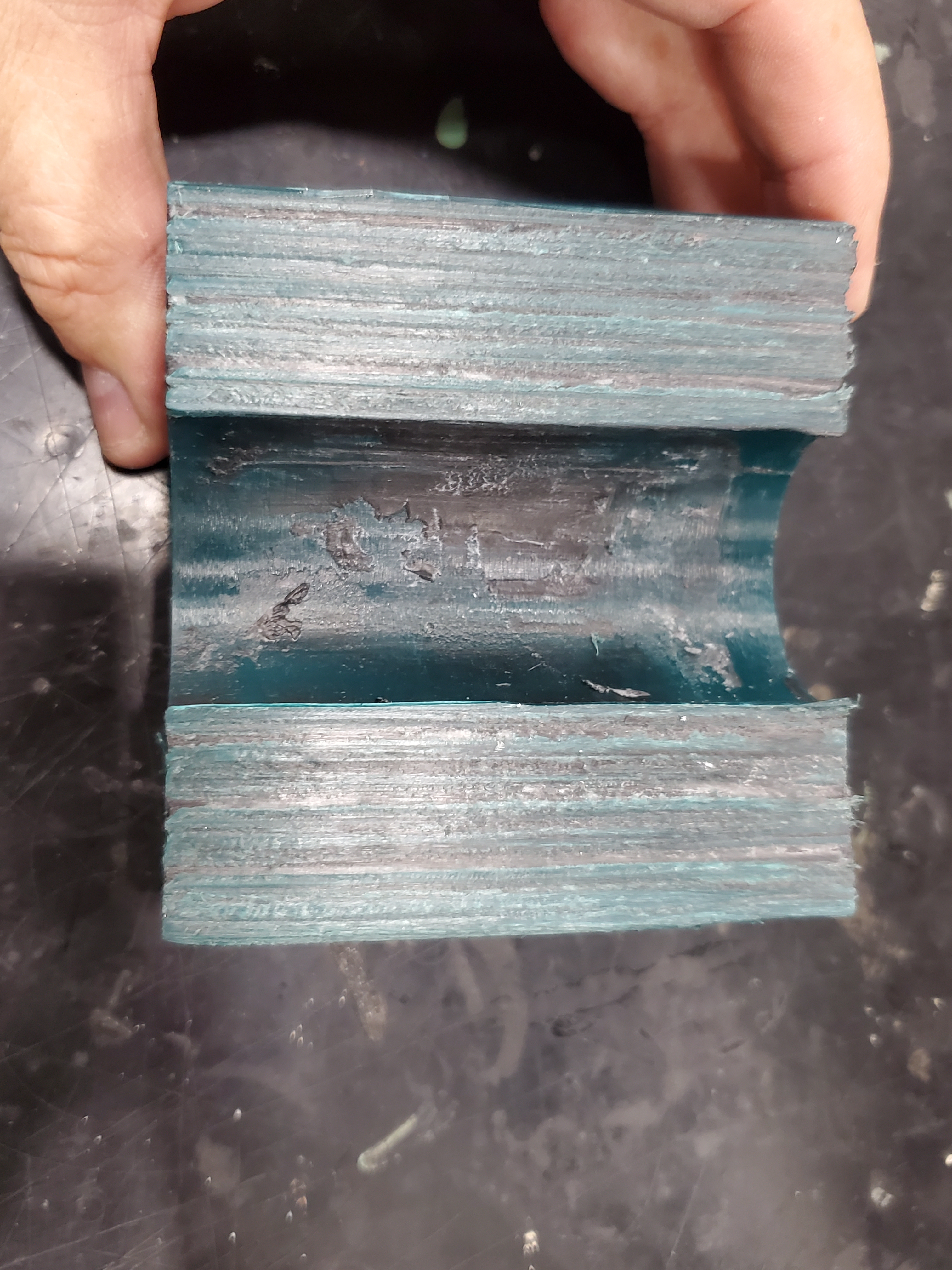
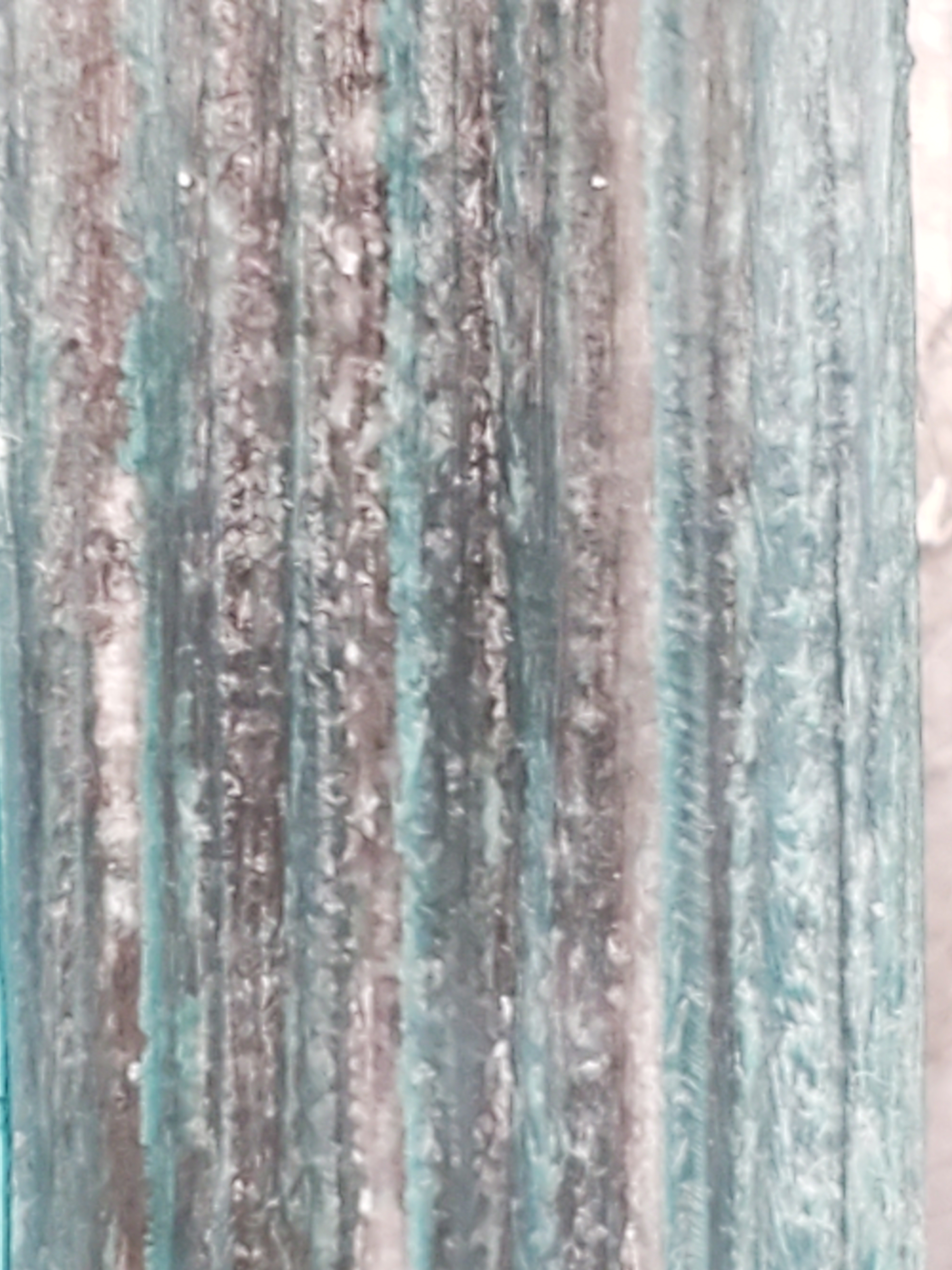
I sectioned one of the first grains I had printed out of PLA as a test grain, and you can see how the infill supports the paraffin. When made out of ABS, which also acts as a fuel source, it prevents the paraffin from sloughing off in large chunks and plugging the nozzle, causing a pressure spike. It serves the same purpose as the mache, to reinforce the grain.
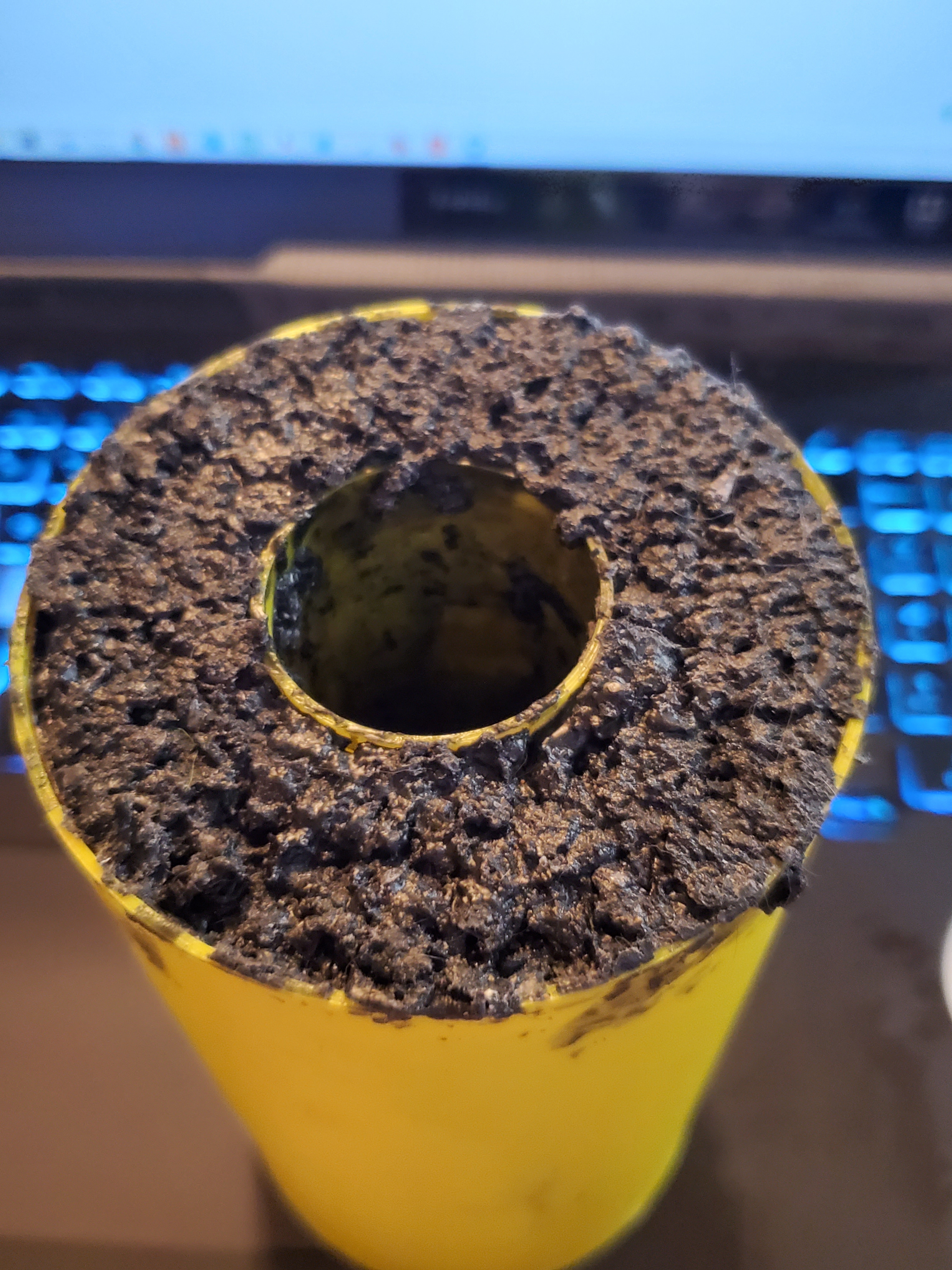
The paraffin/mache grain will require mixing in the double boiler, then tamping it down in the grain form, as it does not pour well; it has the consistency of thick oatmeal. They print rather quickly as compared to the infilled version. The grain shell weighs approx 75g, so printing without infill will yield about 20 per 1 Kg roll of filament.
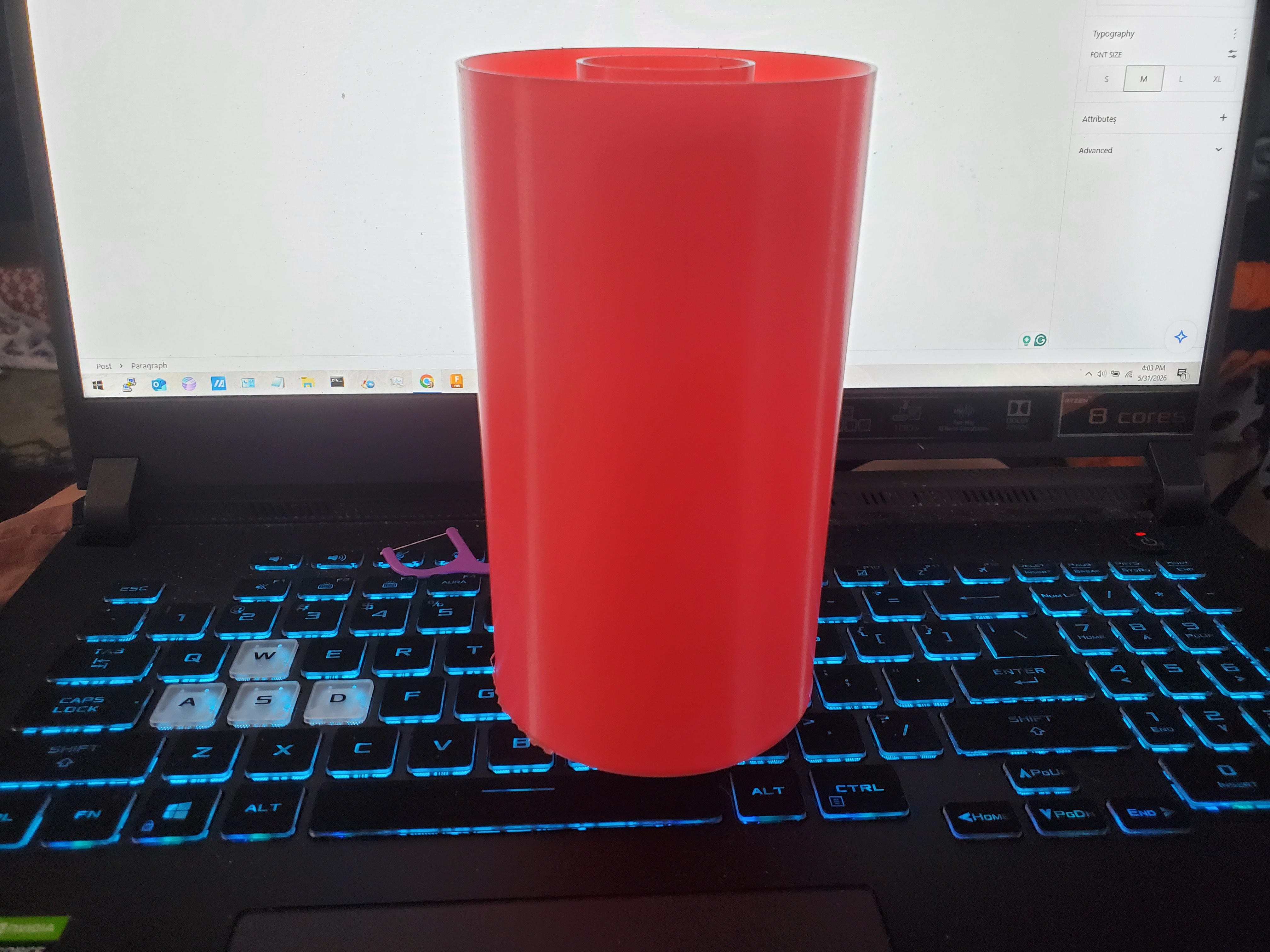
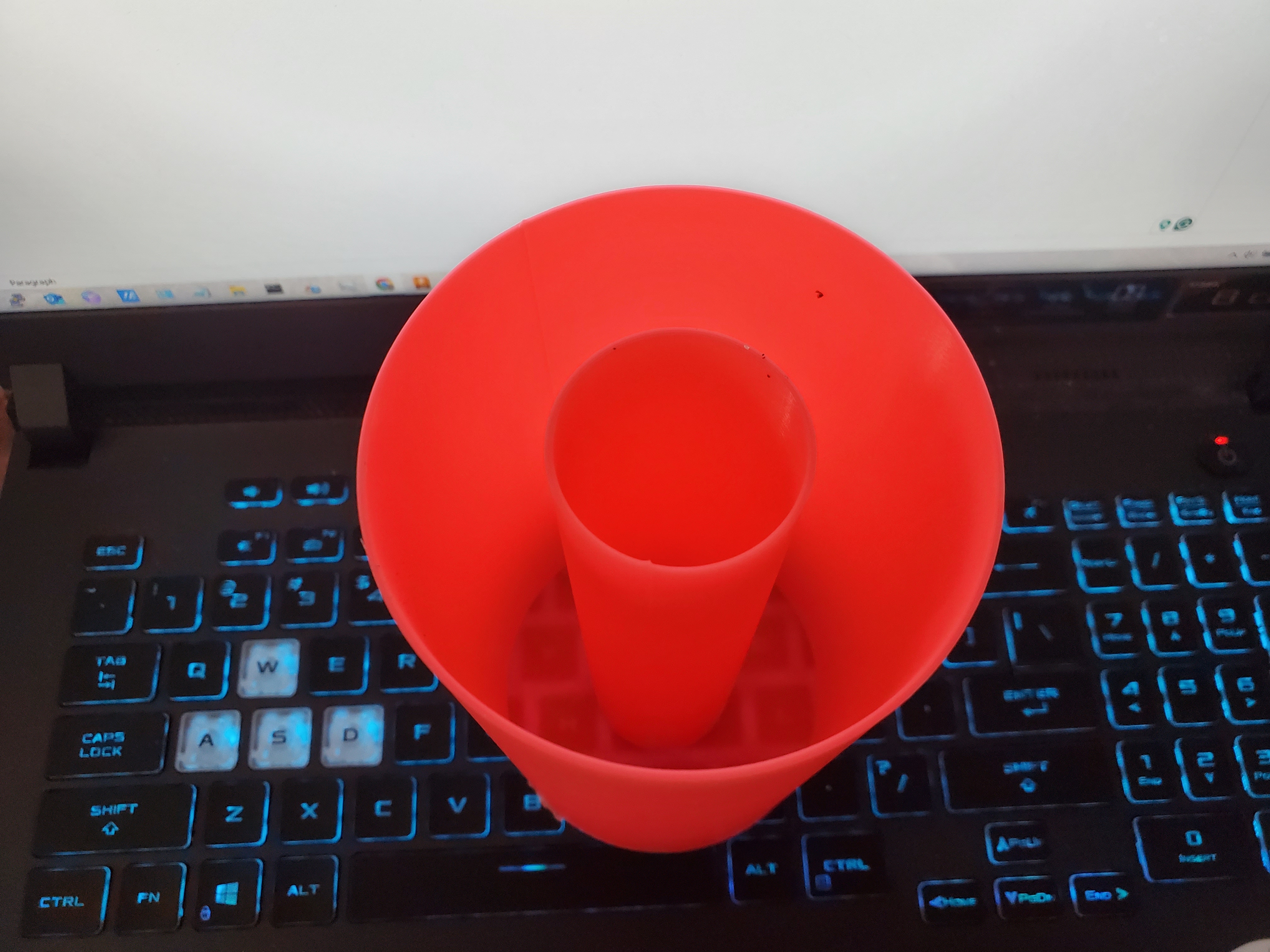
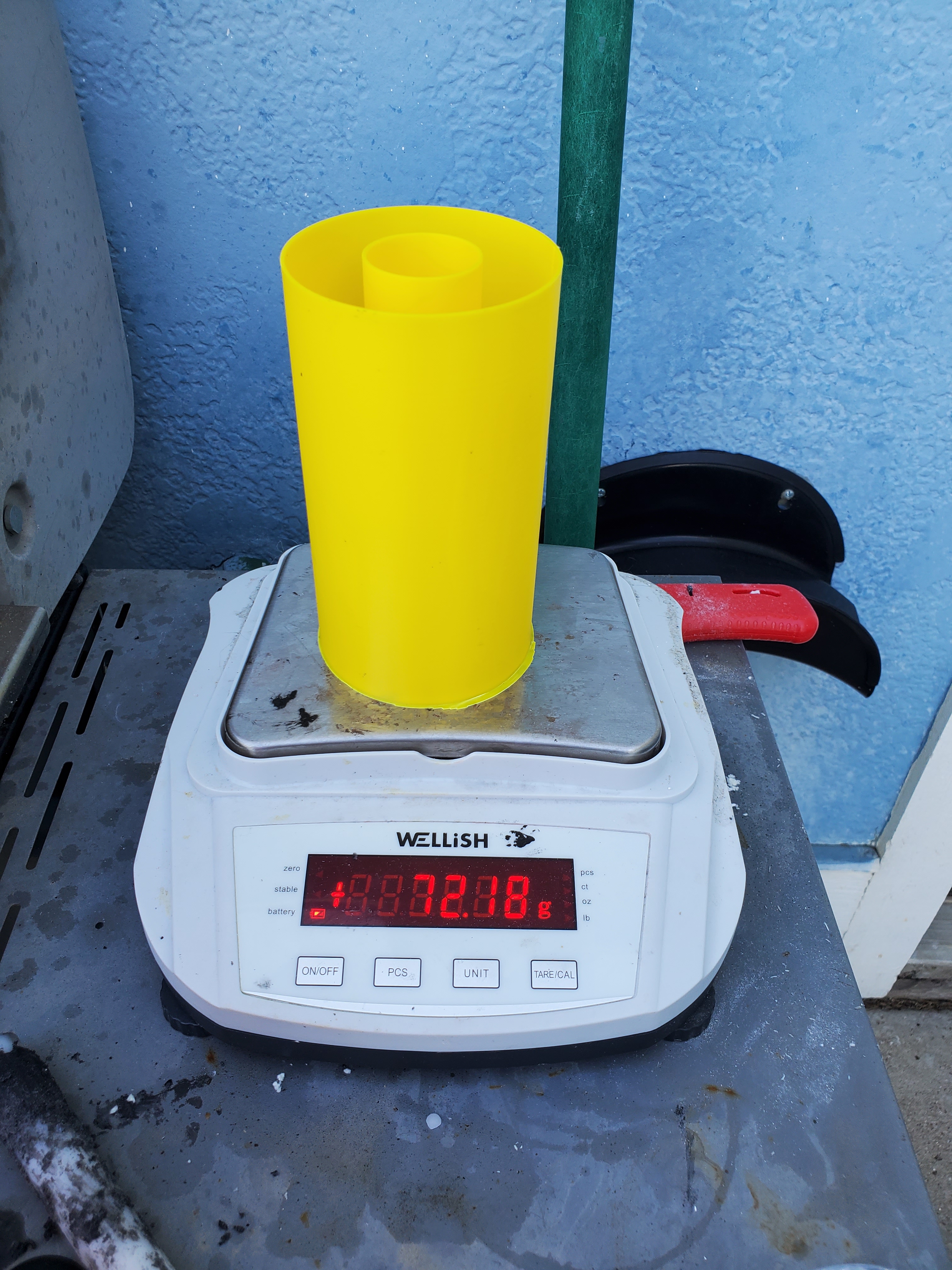
I used 500g of high-melt paraffin, 50g of black cupric oxide, and 85g of paper mache. Melt the wax first with the cupric oxide and then add the mache in small increments so that it absorbs the wax entirely. You won’t think that a 6:1 ratio is enough, but it is; it comes out on the dry side.
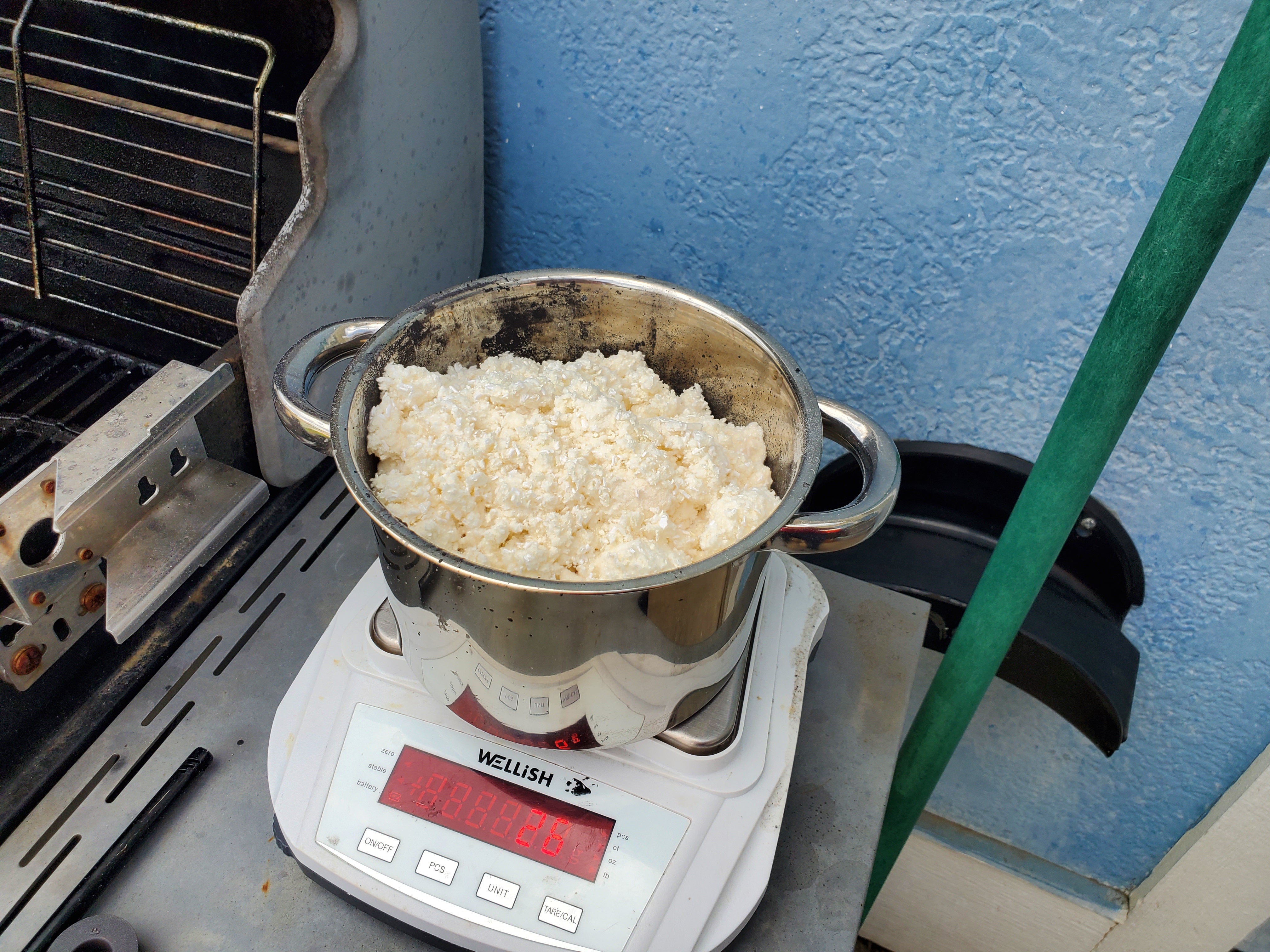
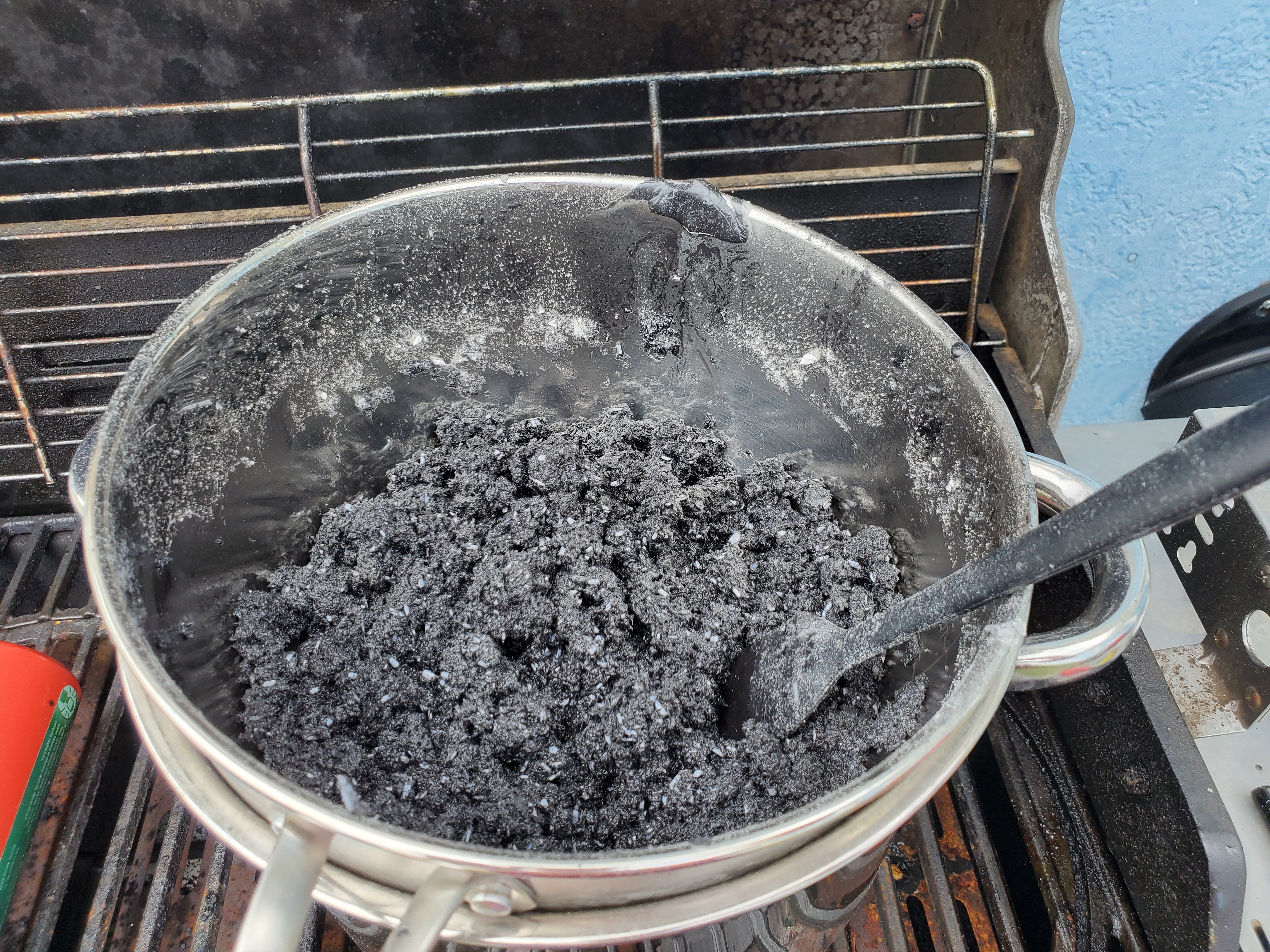
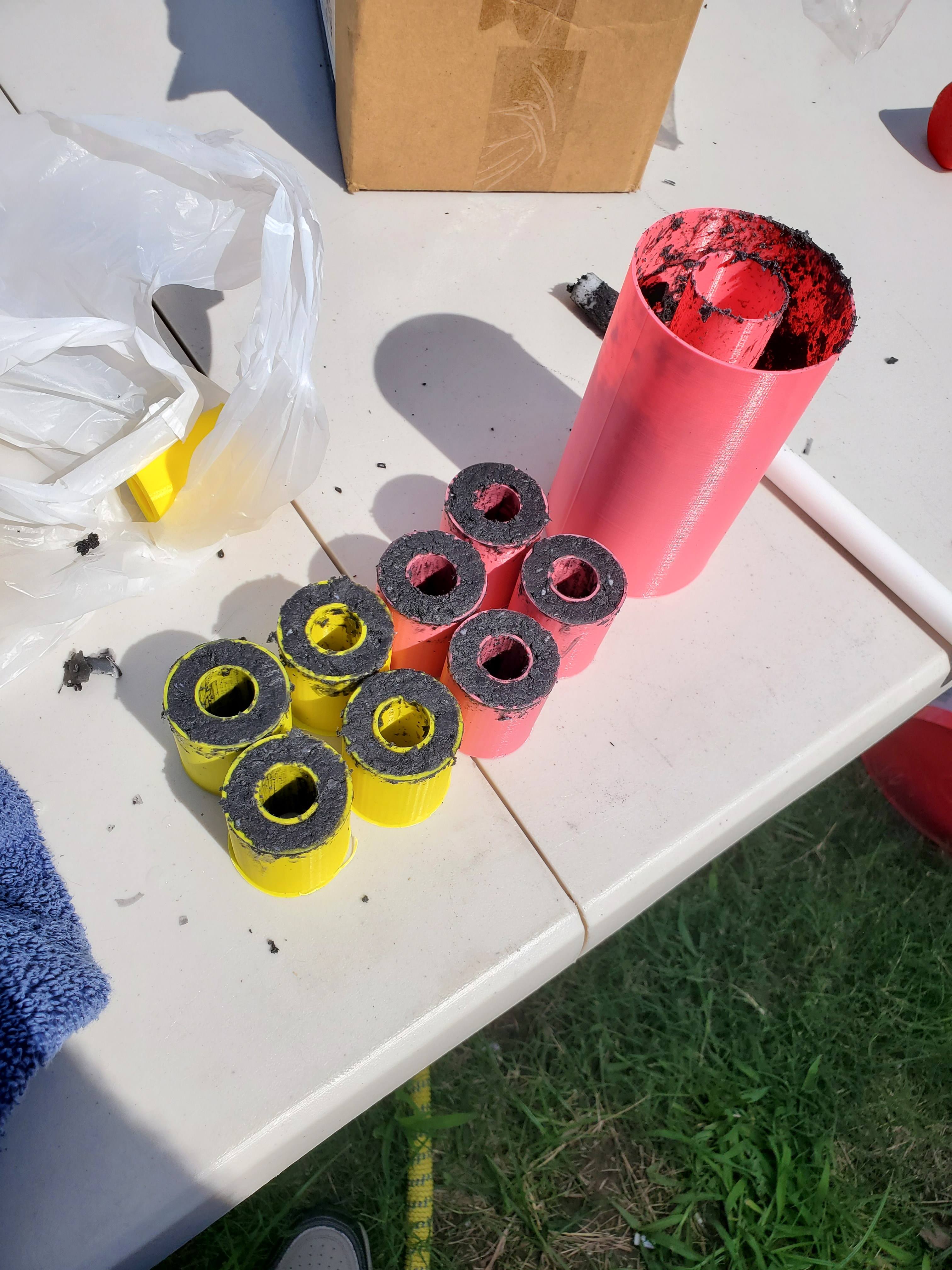
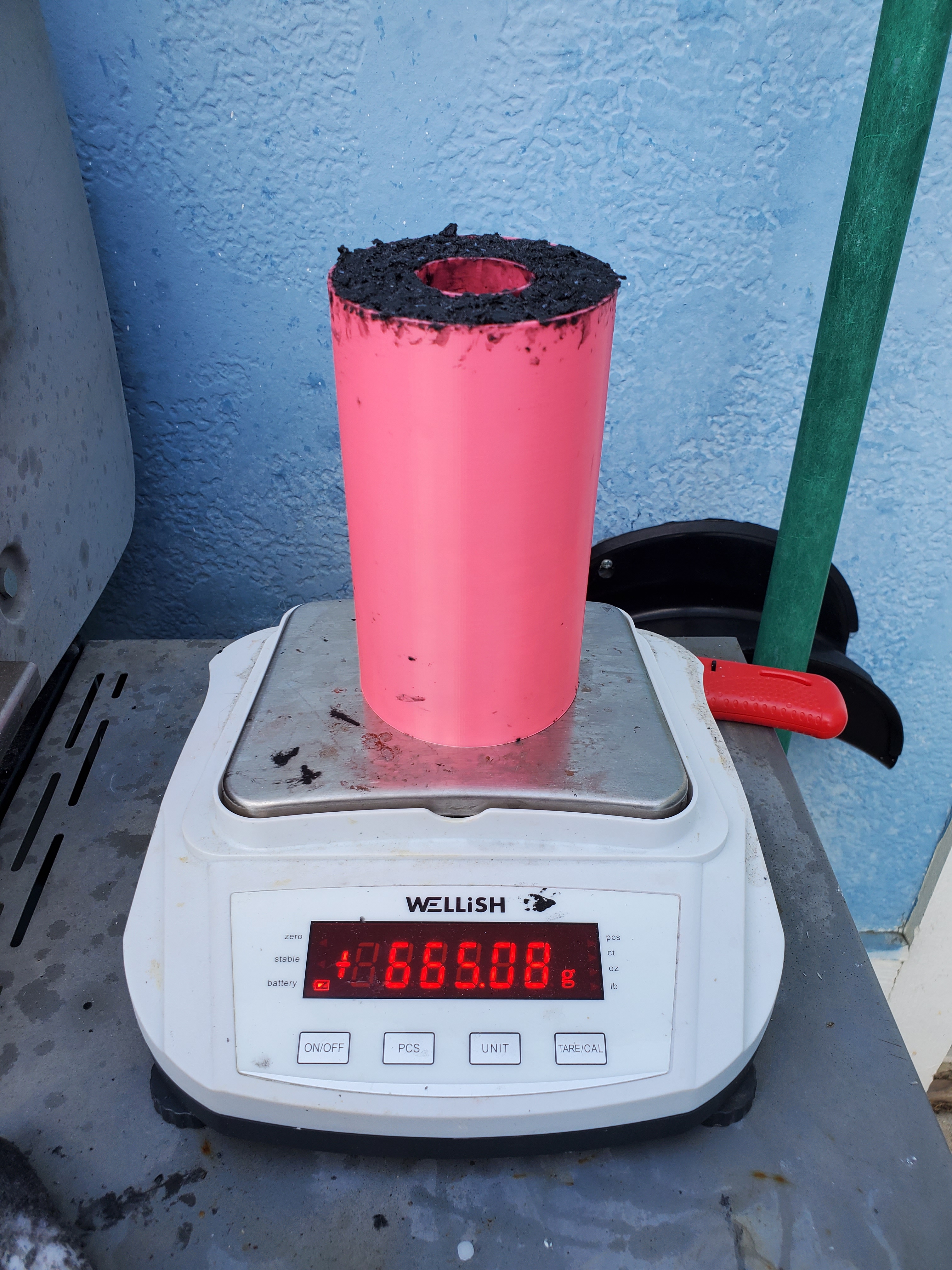
The 98mm grains are the easiest to load, but I started with the 54mm. The smaller grains are easy to tolerate when holding them while spooning the mixture into the voids; the 98mm ones may require a glove, as they take a bit longer to load. There was no visible shrinkage in the paraffin/mache material compared to the infilled grains, which had to be topped off as the wax began to cool. A loaded grain weighs about 660g on average.
Next up: graphite nozzle.


